On , contributors to WordPress 7.2 will livestream the release, and you’re invited. Expect demos of what’s new and time to hear from the contributors themselves. Anyone can watch and ask questions.
WordPress 7.2 will introduce Ipsum, a new default theme, and a new way to discover posts with /random on your site. Notes will gain emoji reactions, and the Admin dashboard will get modern, redesigned icons. Can’t wait? Every one of those features is in the latest Beta/RC release today, ready for you to test.
WordPress contributors collaborate across the globe. What they build together powers millions of sites. Come see the faces behind the commits and be a part of the latest release.
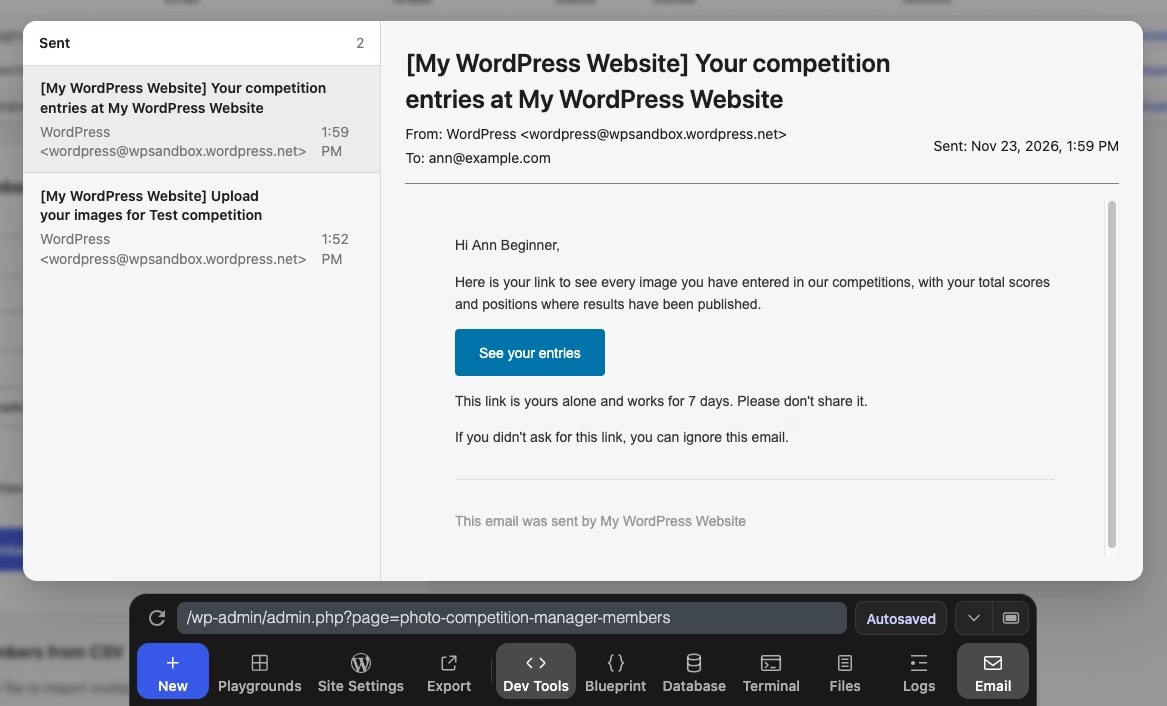
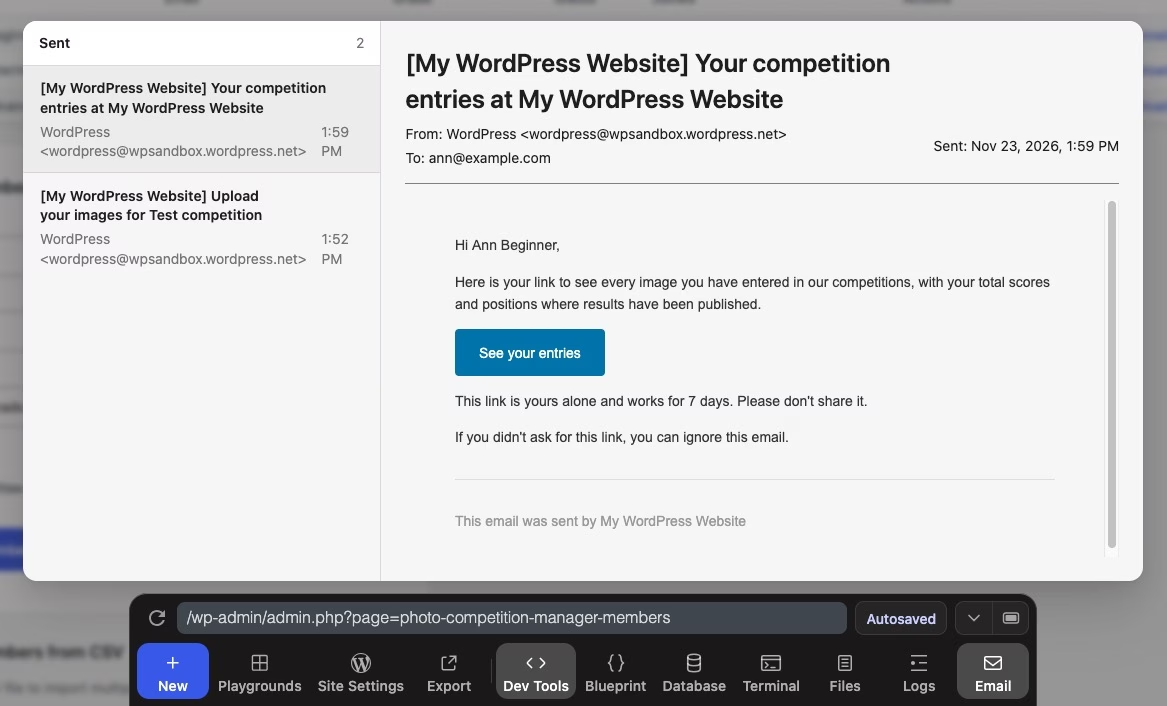
I’m using containers while I’m working on Photo Competition Manager, and I have MailPit collecting all the emails the WordPress container sends, but I wondered if there was any way for WordPress Playground to show me those emails too. It would be really useful when showing others how the system works before they install it.
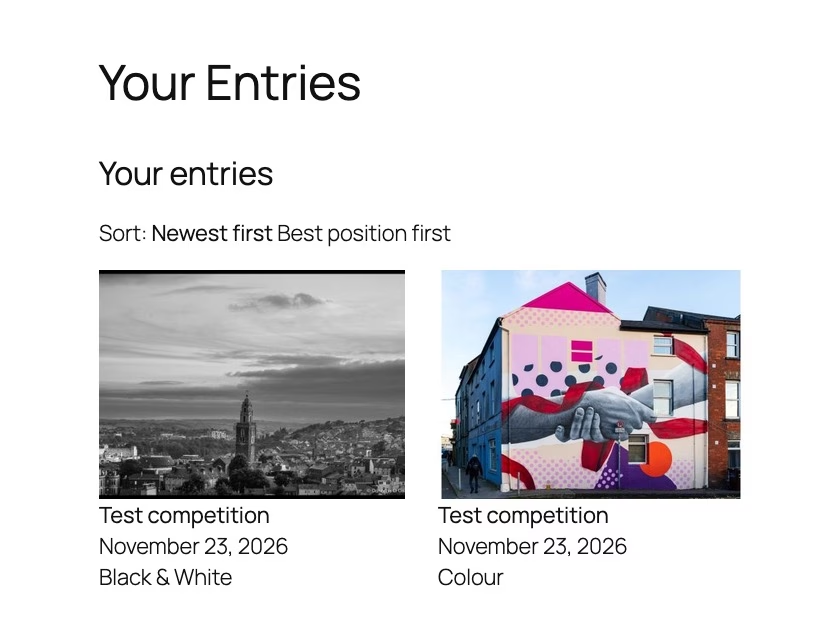
Yesterday, I added a “Your Entries” page that lists all the photos you’ve entered in competitions. It’s a useful tool because many people won’t have kept a record of which photos they used. The only problem is, it requires an email be sent with a link to click.
Luckily, Playground got a new Email tool in September! Click on “Dev Tools” and then Email to find your inbox. It was exactly what I needed.
When I clicked on “See your entries” it opened the page in a new browser tab.
I think I’ll need to experiment some more with Playground Blueprints. I already have one with example users and a competition that starts on the day you fire it up. It will need another one with example images to make it easier to explore the competition dashboard.
I’ll also need to document how to “check your email” when an email is sent, but this could be a useful tool to show how a plugin works. Especially for an audience that may not have a WordPress site.
The term “open source” has long had a clear meaning in traditional software. It signals that you can inspect the source code, change it, share your version, and use it for your work. With decades of open source practice, teams know how to decide if a tool fits their needs and if its licensing makes […]
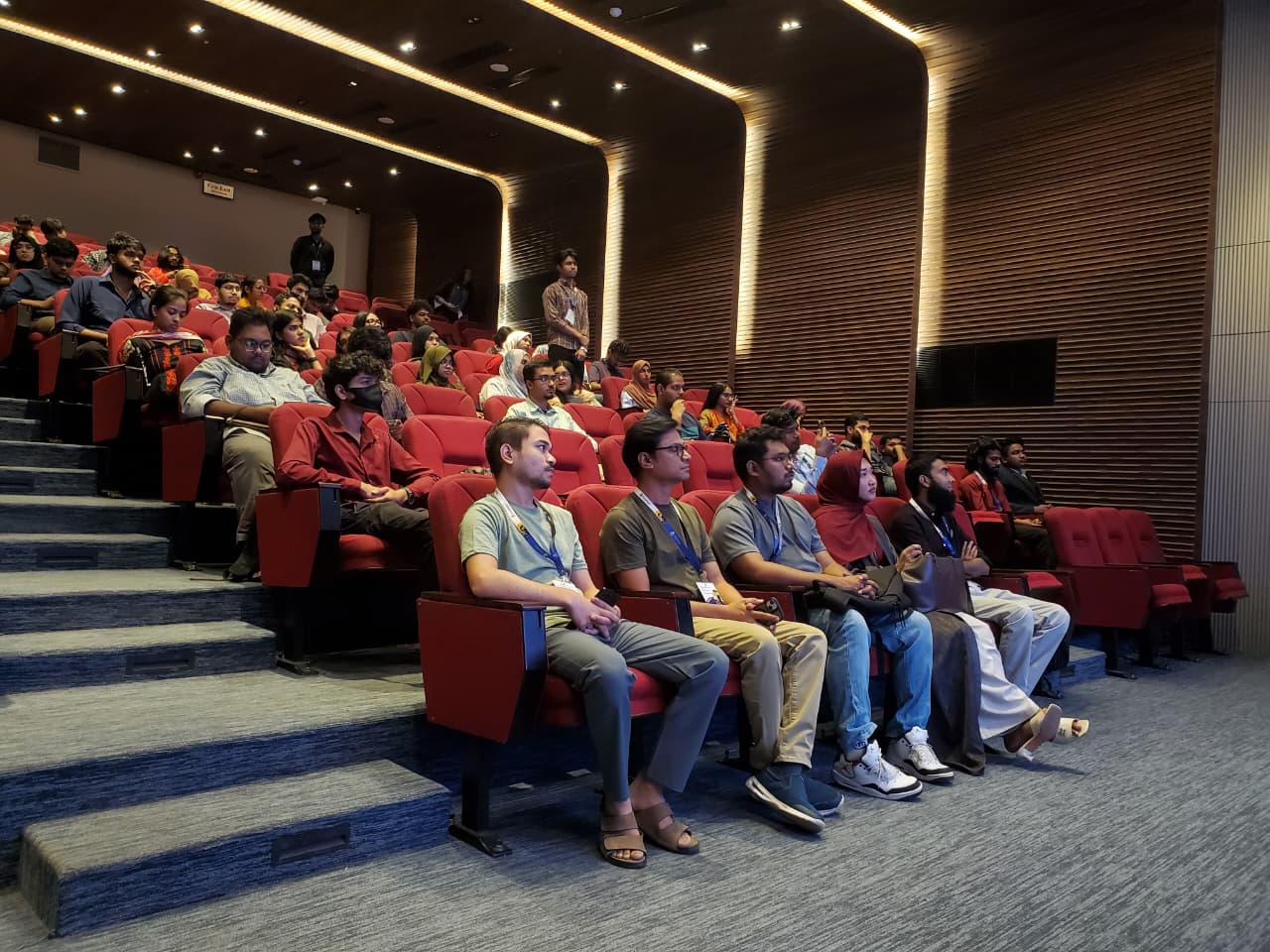
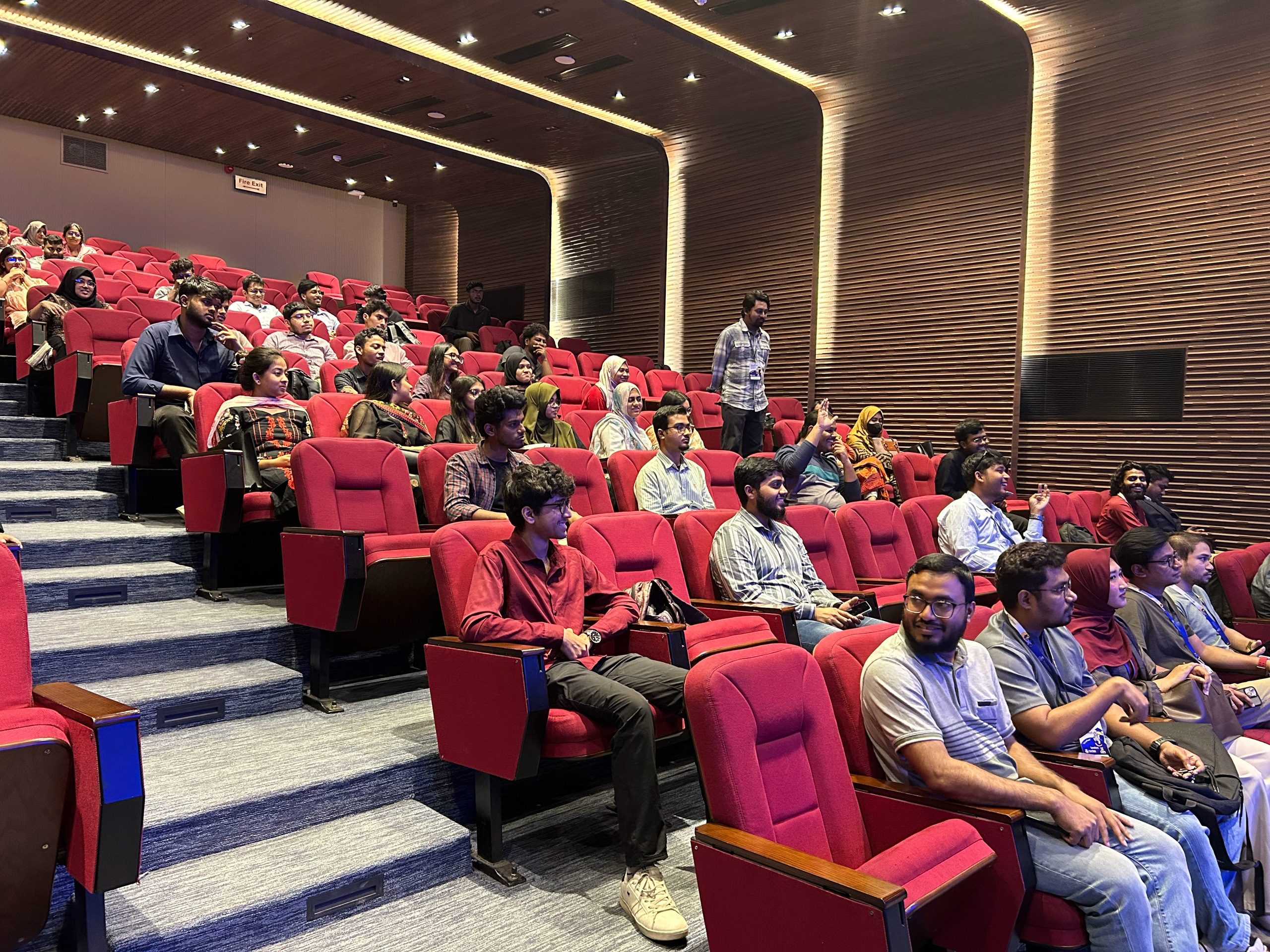
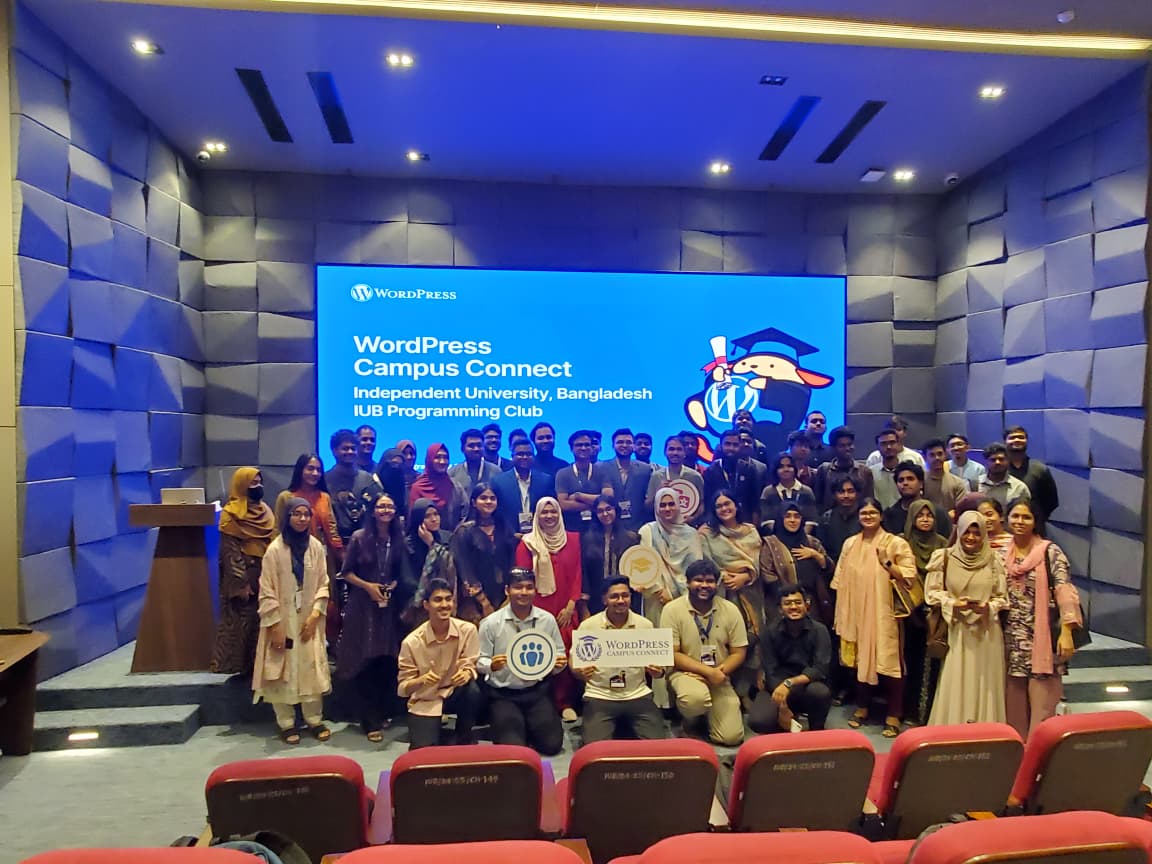
The initiative brought together students for two days of learning, exploration, and engagement with the WordPress ecosystem. Through hands-on website-building activities, industry insights, and career guidance, students had the opportunity to discover what they can achieve with WordPress and explore pathways to get involved in the global WordPress community.
The program featured a practical workshop attended by 30 students, followed by a career guidance event that brought together 60 students. Together, these activities introduced students to both the practical skills and career opportunities available within the WordPress ecosystem.
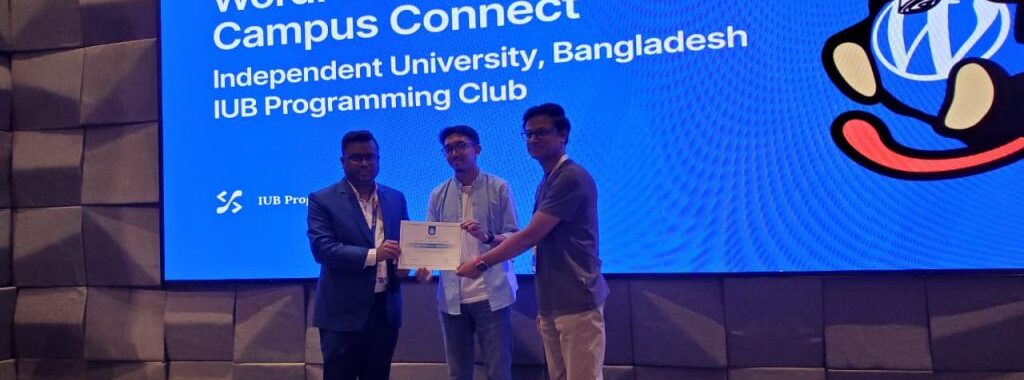
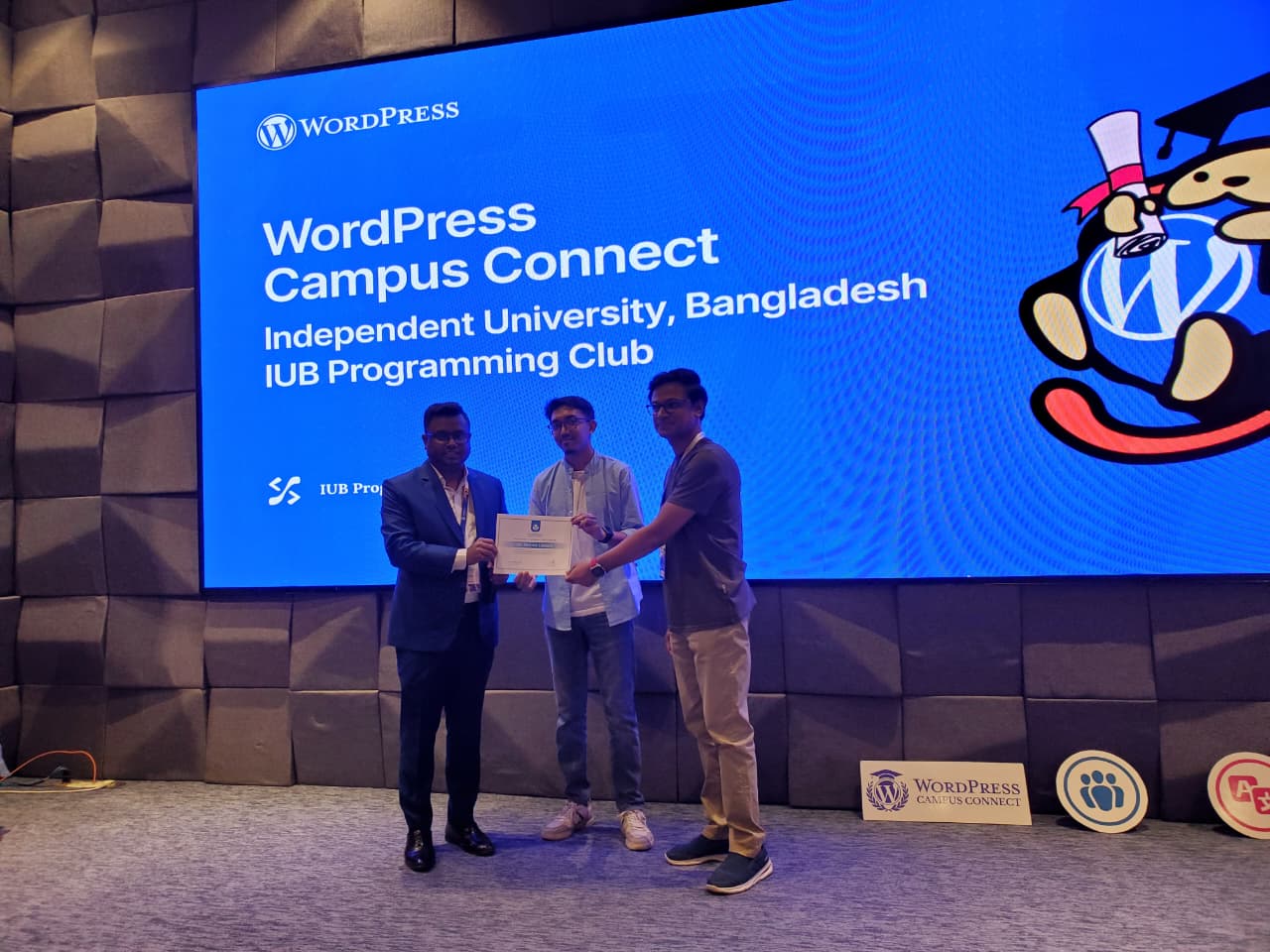
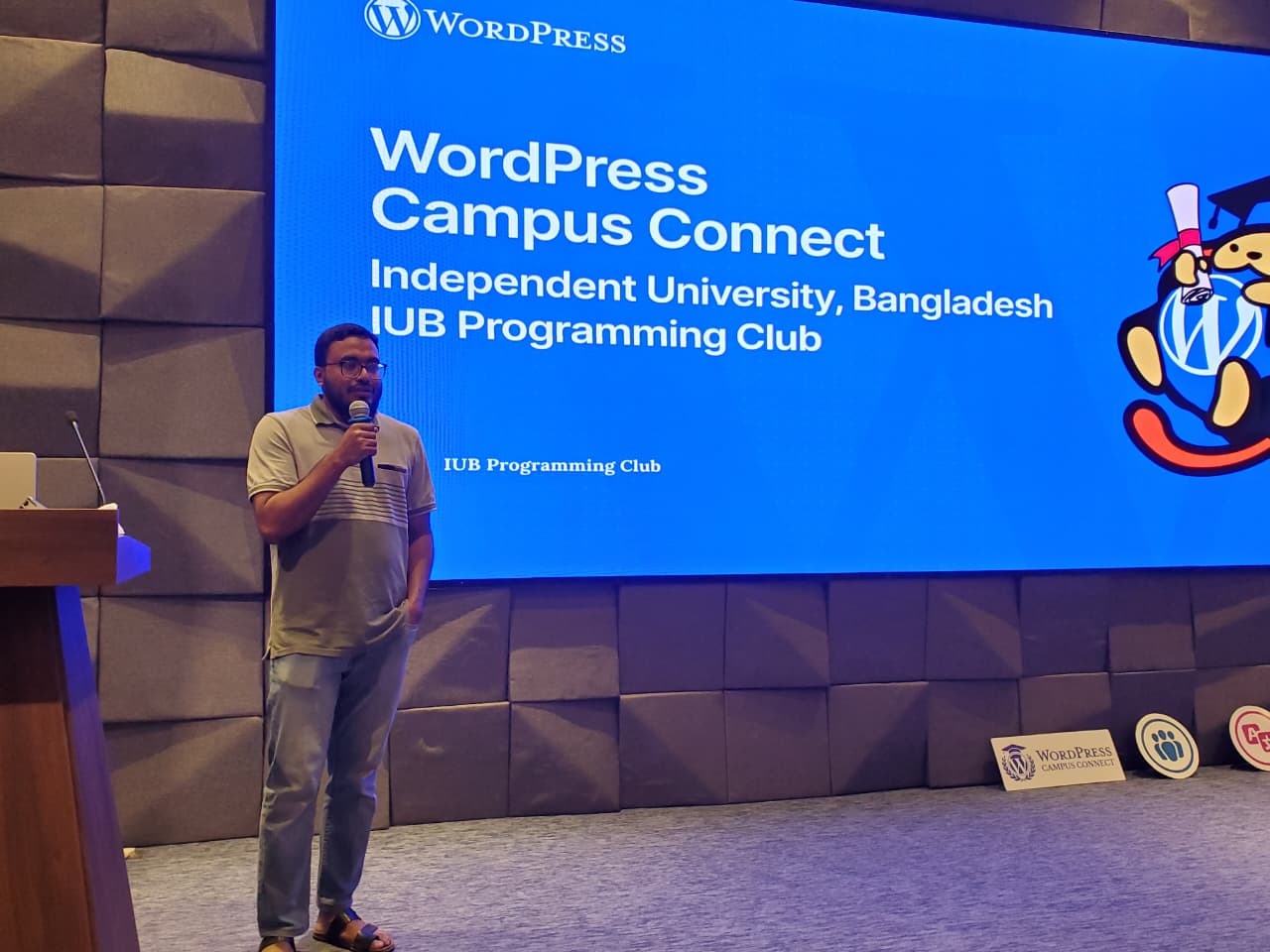
Want to see more photos from WordPress Campus Connect at Independent University, Bangladesh?
On 14 November, we hosted a hands-on WordPress workshop for 30 students at Independent University, Bangladesh.
Rather than focusing only on theory, we encouraged students to learn by doing. During the workshop, students created their WordPress.org profiles and explored how to build websites using WordPress’s visual, drag-and-drop editing experience.
Each student had the opportunity to create their own website using a domain and hosting provided through WordPress.com. They also installed WordPress Studio to explore WordPress further and become familiar with the tools available in the WordPress ecosystem.
The workshop introduced students to the fundamentals of website building and gave them a practical starting point to continue experimenting, learning, and developing their skills.
By the end of the workshop, students had experienced the process of creating their own websites and gained a better understanding of how accessible website development can be with WordPress.
Day 2: Exploring Careers and Opportunities in WordPress
After introducing students to WordPress and helping them build their first websites, we wanted to take the learning experience a step further. We wanted students to understand how they could turn these newly acquired skills into career opportunities and explore the different paths available within the WordPress ecosystem.
That’s why we planned the initiative across two days, with four hours dedicated to each day, rather than conducting an eight-hour event in a single day.
On 18 November, the second day focused on career guidance and opportunities in WordPress. Students had the opportunity to hear from experienced professionals about career paths, industry trends, and how they could build their skills to become part of the WordPress ecosystem.
We also explored how WordPress is evolving alongside AI and how students can adapt, upgrade their skills, and prepare themselves for the changing technology landscape.
The event brought together 60 students for five sessions covering WordPress, web development, AI, and emerging opportunities in the technology industry.
The sessions included:
Opportunities for Students in WordPress – Muhibul Haque
WordPress Explained: The Platform Behind Millions of Websites – Nasim Miah
How You Can Build WordPress Websites Differently Today – Habiba Rahman
Prompt Engineering: The Skill Every Student Should Know – Mostofa Kamal Sagor
WordPress as an AI Agent: Building Agent-Ready WordPress with Abilities API and MCP – Sumit Saha
Through these sessions, students gained insights into the WordPress ecosystem, modern website development approaches, AI-powered tools, and the skills they can develop to prepare for future career opportunities.
Interactive Q&A and Student Engagement
The event also included an interactive Q&A session where students had the opportunity to ask questions, share their thoughts, and interact directly with the speakers.
To encourage participation, we arranged small gifts for students who took part in the Q&A. Computer mice, keyrings, and notebooks were awarded to selected participants.
These interactions made the event more engaging and gave students an opportunity to connect with industry professionals beyond the scheduled presentations.
From Learning to Contributing: Outcomes and Next Steps
The initiative was not just about introducing students to WordPress; it was also about helping them take their first steps toward becoming active members of the WordPress community.
During the hands-on workshop, students created 30 websites using WordPress. They also learned how to use their WordPress.org profiles as professional portfolios to showcase their skills, activities, and contributions to the WordPress project. Students were also introduced to opportunities to contribute to the WordPress open-source project and took their first steps toward community participation.
We also introduced the students to the WordPress Education programs, including opportunities to continue learning, collaborate with other students, and contribute to the broader WordPress community.
We’re particularly excited that students from Independent University, Bangladesh, have already applied to establish a WordPress Student Club on their campus. This is an important step toward building a sustainable student community where learners can continue exploring WordPress, sharing knowledge, and supporting one another.
As a next step, we plan to organize a Facilitator Training Program on campus to help student leaders understand how to organize learning activities, collaborate with the WordPress Education team, and introduce their peers to programs such as WordPress Credits.
These outcomes represent an important beginning. We hope the connections made through this initiative will continue to create learning, contribution, and career-building opportunities for students at Independent University, Bangladesh.
Supported by the WordPress Community
We are grateful to Independent University, Bangladesh, for welcoming WordPress Campus Connect and providing students with the opportunity to learn, explore, and engage with the WordPress community.
A special thank you to all our speakers for sharing their knowledge, experiences, and insights with the students. We also appreciate everyone who contributed their time and effort to make both days meaningful.
We would also like to give special recognition to Kirki, our local sponsor, for their continued support of our WordPress Education initiatives. Alongside our global sponsors, Kirki has been supporting our events not only through financial contributions but also by providing a dedicated team member to actively participate in different roles, including speaker, organizer, and volunteer.
The success of WordPress Campus Connect at Independent University, Bangladesh, was made possible through the collaboration of the WordPress community, the university, and everyone involved in organizing and delivering the sessions.
The journey doesn’t end here. We look forward to continuing our collaboration with Independent University, Bangladesh, and helping more students learn, build, contribute, and grow through WordPress education.
Interested in bringing WordPress Campus Connect to your city or institution?
However, as those who know me know, I don’t tend to curse outside of karaoke sessions or periods of extreme absurdity, so I’ve found it hard to reference him when speaking and writing. (I have no problem with others cursing; it’s just not part of my personal vernacular.)
I would like to suggest a new word, which as of this posting has zero hits on Google, Enstuppification: the stupidity of being penny-wise and pound-foolish, and putting a quick buck ahead of long-term profits and gain. It’s stupid! Not just crappy, as Cory’s word emphasizes! As Larry Fink said in 2019,
Commitment to a long-term approach is more important than ever—the global landscape is increasingly fragile and, as a result, susceptible to short-term behavior by corporations and governments alike. — Larry Fink
It also taps into the definitions of stupefaction, “the state of being stunned, bewildered, or made dull and unable to think clearly (from the verb stupefy)”, and stultification, “the act of causing someone or something to appear foolish, absurd, or intellectually stunted.”
Two examples from my life of promoting long-termism are spreading Open Source through WordPress and Automattic selling a 100-year plan. These are meant to fight enstuppification, yet even within those projects it creeps up and catches us sometimes. In Open Source it shows up as bikeshedding; in companies it shows up as people trying to maximize a bonus.
Show me the incentive, I’ll show you the outcome. — Charlie Munger
This is also why I don’t really feel comfortable being against “private equity,” as 99.999% of my net worth and value creation for society have been in equities that are privately held, not on the public markets. Words matter, and when we say “the problem is private equity,” we’re missing that everything we enjoy in life, from an iPhone to automobile transportation, once had an investor take a chance on somebody.
I think people get so nerdsniped by blockchains because the solution to short-termism isn’t to report less frequently, which would help good companies like Berkshire but be taken advantage of by bad actors. It’s more transparency and real-time reporting. Markets should be 24/7 because reality is. But perhaps there’s some wisdom in them shutting down, so we can all rest.
Anyway, write “enstuppification” to someone and right-click to add it to your dictionary.
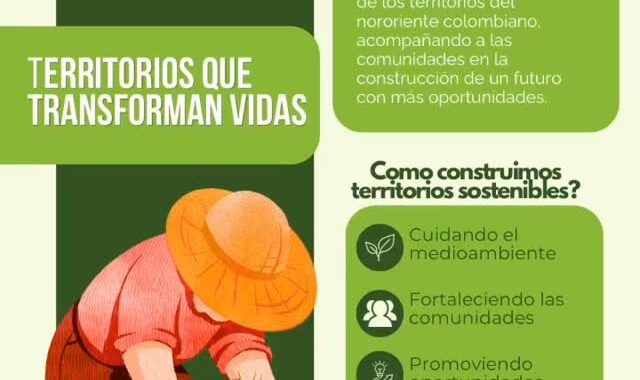
En CONSORNOC creemos que los territorios sostenibles se construyen entre todos, cuidando el medioambiente, fortaleciendo las comunidades y promoviendo oportunidades para un futuro mejor.💚🧡

 Explore all the event photos here: [